
Why Are You Still Gaining Weight Even When You Are Doing Everything Right?
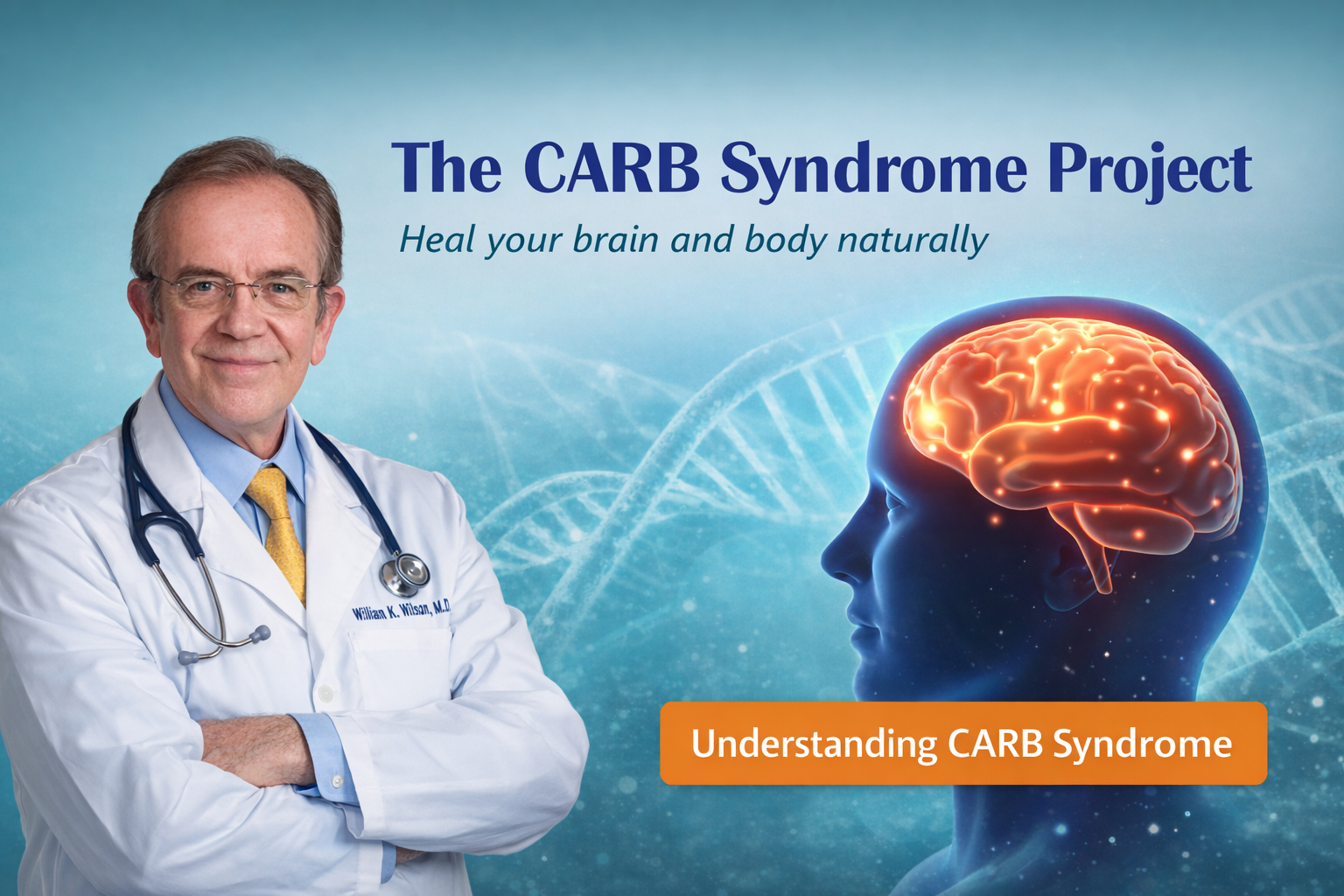
Dr. Bill Wilson’s CARB Syndrome model explores how brain function and the body’s response to carbohydrates may be connected to fat gain, cravings, and related symptoms.
If traditional diet strategies have not worked for you, the issue may not be willpower. It may be how your brain and body respond to carbohydrates.
Common Concerns
- Fat gain that does not make sense
- Cravings for sweet or starchy foods
- Brain fog, anxiety, irritability, or low energy
- Frustration with diets that do not last
- Questions about how food may be affecting your brain and body

Experience You Can Trust
Dr. Bill Wilson is a board-certified family practice physician with a longstanding interest in neuroscience, metabolism, and body composition. Over time, his clinical work has focused on understanding patterns in fat gain, metabolic function, and chronic health conditions.
A Clinical Perspective
Over a 16-year period, Dr. Bill Wilson developed a database of more than 18,000 cases while studying patterns in body composition, fat storage, and chronic health conditions.
This work helped shape his understanding of how metabolism and brain function may be connected, leading to the development of the CARB Syndrome model.
A Different Way to Understand the Problem
Many people are told to simply eat less and move more. That advice often ignores how the brain regulates hunger, cravings, mood, and energy balance.
The CARB Syndrome approach is built around the idea that the brain plays a central role in fat storage, appetite, mood, and energy. It offers a different way to think about why so many people struggle with weight and related symptoms.
Why Traditional Diet Approaches Often Fall Short
Many weight loss plans focus only on calorie restriction or strict meal rules. While these strategies can sometimes create short-term results, they often fail to address the deeper patterns that drive cravings, hunger, and low energy.
Persistent Cravings
When appetite and reward systems are disrupted, cravings can become difficult to control.
Low Energy
Many people feel stuck in a cycle of fatigue, brain fog, and inconsistent motivation.
Poor Long-Term Results
Without understanding the underlying mechanism, progress is often difficult to maintain.
A Different Way to Understand Weight Gain
The CARB Syndrome model focuses on how carbohydrate intake affects brain signaling and metabolic response. Instead of following another one-size-fits-all plan, this approach gives people a clearer framework for understanding what may be contributing to their symptoms.
What This Approach Can Help You Do
- Recognize patterns in cravings, appetite, and energy
- Understand how food may be affecting brain and body function
- Gain a clearer perspective on why past approaches have not lasted
- Take a more informed next step
Who This May Be For
- People who have struggled with fat gain despite repeated effort
- Those who notice cravings, mood changes, or brain fog after carbs
- Individuals looking for a more thoughtful explanation of their symptoms
- People who want a more educational and structured path forward
Take the First Step Toward Understanding Your Health

If you have struggled with weight, cravings, or unexplained symptoms, this is an opportunity to gain clarity. Submit your question below to learn more about CARB Syndrome and how it may relate to your situation.
Frequently Asked Questions
These are common questions about CARB Syndrome, carb sensitivity, and symptoms such as anxiety, brain fog, cravings, and low energy.
Can carbs and alcohol trigger symptoms?
They can in some people. Changes in blood sugar and insulin may affect the patterns associated with cravings, mood, and energy.
Why do some people feel anxious after eating carbs?
Rapid shifts in blood sugar and related brain signaling may play a role in how some people feel after eating certain foods.
Can carb sensitivity affect mood and focus?
It may. Some people report brain fog, low motivation, or mood changes that seem connected to food response patterns.
How is CARB Syndrome identified?
It is generally evaluated through symptom history, metabolic patterns, and how the body responds to carbohydrate intake.
Can reducing carbs improve symptoms?
Many people report improvement when carbohydrate intake is lowered and food choices are more supportive of stable energy and appetite.
How long can improvement take?
That can vary. Some people notice changes quickly, while others need more time depending on their symptoms and consistency.
Ask Dr. Bill Wilson a Question
Fill out the form below to get in touch and learn more about CARB Syndrome.