
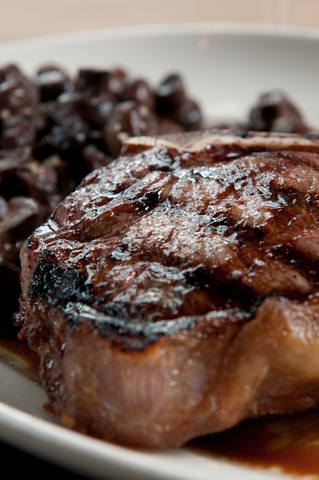
steak feastsea scallops for a feast
That’s right. You can increase your caloric intake and lose fat. How is this possible? After all, haven’t the experts been telling us that weight gain is all about calories in/calories out? Unfortunately it’s not quite that simple. Remember that obesity is defined as excessive body fat, essentially a body composition issue. The “experts” decided to throw science out the window and use weight and BMI to define obesity even though neither one measures body fat.
I learned a lot about obesity by taking over 18,000 body composition readings on my patients over the past 15 years. When you measure body composition you aren’t guessing—you know exactly how much fat is present relative to other body components like muscle and water. The first thing I learned is that when you quickly lose weight through calorie-restricted dieting, even though you lose some fat you also lose a lot of lean body mass, especially muscle. This is the type of weight loss touted on the show “The Biggest Loser”. When these individuals try to go back to eating a reasonable amount of food, their body replaces the lost muscle and starts to store fat again. Medical studies have clearly shown that these rapid weight loss diets don’t result in long-term weight loss.
If you suffer from obesity you need a fat-loss program, not a weight-loss program. In order to lose fat you need to know why you are storing extra fat in the first place. It’s unlikely that the cause is simply over-eating. Animals in the wild never become obese regardless of how much food is in their environment. If you feed these animals our food, they start to become obese. What’s so special about our modern diet?
You have spent any time on this site you already know the answer. Our diet is loaded with excessive fructose mainly from sucrose (sugar) and HFCS. When you throw in fruit, fruit juice, honey and other sources of fructose, you easily exceed the 25 grams of fructose per day that humans can safely consume. That’s about the amount of fructose in three apples. Once you exceed this limit, you start to fill your liver up with fat leading to insulin resistance where glucose can no longer easily enter into the cells in your body.
When you have insulin resistance and consume high glycemic (rapidly absorbed) carbohydrates especially from grains, your brain is subjected to magnified glucose spikes. Because nerve cells don’t require insulin for glucose to enter into the cells, when you have high glucose levels in your blood your also have high glucose levels in your nerve cells. Because in high doses glucose is toxic to cells, over time these magnified glucose spikes trigger a chronic brain disorder called “Sugar-Brain”. The medical term for Sugar-Brain is Carbohydrate Associated Reversible Brain syndrome or CARB syndrome.
Over time people with CARB syndrome develop up to 21 brain dysfunction symptoms reflecting low levels of monoamine neurotransmitters such as dopamine, norepinephrine and serotonin. When people with CARB syndrome develop these symptoms, they often overlap with symptoms of classic psychiatric disorders such as depression, anxiety disorders or bipolar disorder. As time goes on they end up with “labelitis” where they accumulate multiple diagnoses including depression, ADHD, PTSD, anxiety disorders, eating disorders, bipolar II, fibromyalgia, irritable bowel syndrome, obsessive-compulsive disorder and other conditions.

sea scallops for a feast
Because the brain plays a key role in auto-regulating fat stores, people with CARB syndrome eventually lose this auto-regulatory function and they begin to store extra fat at any caloric intake, even as they lose lean body mass through dieting. That’s why people with anorexia always have excessive body fat even when they are thin but you have to measure their body composition to see it. If a person eats a lot of food when they have CARB syndrome they will store a lot of extra fat, causing them to become visually obese, the kind you can easily see. If a person with CARB syndrome eats very little food, they will store a little extra fat and lose a lot of lean body mass, actually increasing their level of obesity as they lose weight. Despite the fact that both groups vary in size, they both have fried brains and too much fat in their bodies. Thus although more calories will cause more fat storage, excessive calories are not the cause of the extra fat storage. Are you still following me?
When I measure someone’s body composition and find out that they are losing lean body mass, I know that they are over-restricting calories and losing muscle. Several years ago I saw two females on the same day. I was attempting to treat both of them for CARB syndrome. Patient #1 was following my advice and had lost about 30 pounds over three months. When I measured her body composition almost all this weight loss was fat loss. She had dropped four clothing sizes and looked ten years younger.
Patient #2 also lost about 30 pounds over three months. When I measured her body composition almost all her weight loss was lean body mass. When I confronted her she admitted that she wasn’t following my recommendations but instead decided to severely restrict calories so she could lose weight faster. She barely dropped one clothing size, looked sick and 10 years older. I informed patient #2 that if she didn’t start eating a reasonable amount of healthy food free of sugar, HFCS and high glycemic carbohydrates, I would not longer be able to treat her.
The take home message is if you have CARB syndrome–the most common cause of excessive fat storage, and you want to lose fat, you need to eat enough food to maintain your lean body mass. You don’t need to restrict calories but you do need to be very careful about the type of food you eat. Eat plenty of meat, fowl, fish, seafood and nuts. Grass fed beef, free range birds and wild fish are preferred. For most people a reasonable amount of dairy is acceptable but I recommend staying away from the low-fat varieties, especially low-fat milk because it generates a strong insulin response. I’m a big fan of high-quality cheese and Greek yogurt without added sugars. Consume all the vegetables you want and a reasonable amount of fruit to keep your fructose intake below 25 grams per day. Totally eliminate sugar and HFCS from your diet and greatly reduce your intake of high glycemic carbohydrates, especially from grains.
If you do so, you can feast every day on loads of healthy food—food that nourished our ancestors until the past few generations, while at the same time your body will slowly shed that pesky excessive body fat. As a bonus you will start to lose your brain dysfunction symptoms, greatly enhancing your ability to function and the quality of your life. The true “biggest losers” are those folks who follow calorie-restricted diets to lose weight. Be well!
And eat plenty of fat too. Our ancestors did it, we evolved on it, and we didn’t make it through ice ages eating olive oil – it is animal fat that we require, for both satiety and HEALTH. Animal fat has been demonized and blamed for obesity and disease for far too long already. It is time that doctors began speaking the truth about this.