
Brain Fog Is Structural — and Reversible
For years I’ve told you that CARB syndrome — Carbohydrate Associated Reversible Brain syndrome — depletes your neurotransmitters. Sugar and ultra-processed foods overstimulate your reward circuits; dopamine and serotonin run dry, and your brain starts calling the shots: cravings, fatigue, brain fog, and weight gain that willpower can’t touch.
Focus on the Structure
That’s true. But it’s incomplete. What’s happening isn’t just chemical. It’s structural. Your synapses — the actual connections between your neurons — are being remodeled by what you eat. Neurons communicate through long projections called axons, which meet the branched receivers — dendrites — of the next neuron at junctions called synapses. The messages crossing those junctions are carried by chemical messengers called neurotransmitters.
Here’s what the neuroscience shows. Synapse loss is the single best predictor of cognitive impairment — better than plaques, better than tangles, better than neuron counts. When synapses disorganize, thinking disorganizes. And three dietary-driven processes attack your synapses directly:
First, brain insulin resistance
Insulin is produced by pancreatic beta cells, and it is the chemical messenger that tells cells — including neurons — that fuel has arrived, and to build and strengthen rather than break down. A steady diet of sugar and refined carbohydrate doesn’t just make your body insulin-resistant — it makes your brain insulin-resistant. And insulin in the brain isn’t about blood sugar; it’s a master regulator of synaptic plasticity, the process by which connections strengthen, and memories form. When brain insulin signaling fails, long-term potentiation fails with it. You don’t just feel foggy. Your synapses literally can’t learn efficiently.
Second, inflammatory pruning
Ultra-processed diets drive chronic inflammation, and in the brain that means activated microglia — your brain’s immune cells — start over-pruning synapses. The mechanism is complement-mediated: the same molecular tags the brain uses to trim connections in childhood get reactivated inappropriately, and healthy synapses get eaten. In animal models, diet-induced obesity produces exactly this: hippocampal synapse loss through inflammatory pruning.
Third, overstimulation remodeling
This is the CARB mechanism taken one level deeper. Chronic sugar overstimulation doesn’t merely deplete dopamine — it forces synapses to remodel themselves around the flood. Receptors downregulate. Dendritic spines retract. The architecture of your reward circuitry physically changes.
Now here’s the part that matters, and the part nobody else is saying: this synapse damage is reversible. The Alzheimer’s field studies synapse loss as a one-way street. But synaptic architecture is dynamic — spines retract and regrow. Remove the dietary insult, restore insulin sensitivity, calm the inflammation, and the brain rebuilds. We see the principle in depression research, where lost prefrontal spines regrow with treatment. CARB syndrome has “reversible” in its name for a reason: I’ve watched it happen in patients for decades.
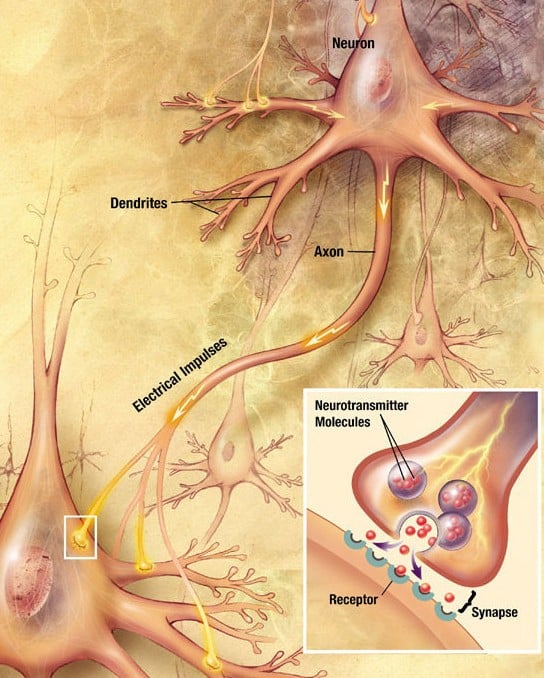
So, no — it’s not your fault. Your brain fog isn’t a character flaw or an inevitable part of aging. It’s the architecture of your synapses responding exactly as biology predicts to a food environment they were never designed for. The brain calls the shots. But here’s the good news the rest of neurology won’t tell you: when you change what the brain is responding to, the shots it calls start changing too. As I always like to say, as you grow older, you really want to take your brain with you, and preventing or reversing CARB syndrome will allow you to do so by following these 10 steps:
- Consume a healthy, whole-food diet with minimal or no ultra-processed food.
- Try intermittent fasting, restricting food intake to an 8–10-hour window each day.
- Exercise regularly, including both aerobic exercise and strength training.
- Take a neurotransmitter precursor, such as CARB-22, to maintain optimal levels of these essential chemicals. If any cravings persist, add more L-glutamine, a safe and inexpensive supplement.
- Consider taking foods containing allulose, a naturally occurring rare sugar that early research suggests may modestly support the body’s own GLP-1 secretion, as recommended by my friend Richard Johnson.
- To reduce chronic inflammation in your body and brain, take a high-quality omega-3 supplement to get your AA/EPA ratio between 1 and 3. I take OmegaRx from Barry Sears of Zone Diet fame.
- Get 7-9 hours of restful sleep every night.
- Expand your social circle.
- Consider meditating on a regular basis.
- If you already have or plan to use a GLP-1 agonist, talk with your prescribing doctor about a low dose and a gradual taper once the above steps are in place.
For more on the science of synapses, I recommend following the work of Dr. Thomas Biederer, Professor of Neurology at Yale School of Medicine — he is among the world’s leading researchers on how synapses form and organize.
Frequently Asked Questions
Brain fog isn’t a formal diagnosis — it’s the word patients use for a cluster of symptoms: poor focus, mental fatigue, forgetfulness, slowed thinking. What I’m saying in this article is that those symptoms have a physical basis in how your synapses are organized, and in CARB syndrome that disorganization is driven by diet.
Through three routes: it makes your brain insulin-resistant (which impairs the synaptic plasticity behind learning and memory), it drives neuroinflammation that causes immune cells to over-prune your synapses, and chronic overstimulation forces your synapses to remodel themselves. Your brain is constantly rebuilding its connections — diet determines what it builds with.
The junction where one neuron’s axon meets the next neuron’s dendrites. Chemical messengers called neurotransmitters cross that junction to pass the signal along. You have trillions of them, and their organization is what makes thinking possible.
No — and that’s the point. You can have brain insulin resistance without diabetic blood sugar. In the brain, insulin isn’t primarily about blood sugar; it’s a master regulator of synaptic plasticity. When brain insulin signaling fails, your synapses can’t strengthen and remodel efficiently, and you feel it as fog.
That’s the “R” in CARB. Unlike the synapse loss of Alzheimer’s, which the field treats as a one-way street, diet-driven synaptic remodeling is dynamic — spines retract and regrow. Remove the dietary insult, restore insulin sensitivity, calm the inflammation, and the architecture rebuilds. I’ve watched it happen in patients for decades.
It varies. Many patients notice clearer thinking within weeks of cutting ultra-processed food and stabilizing their eating patterns. Deeper structural recovery — the full rebuilding of synaptic organization — is measured in months, not days. The brain is patient; be patient with it.
“Reasonably well” by modern standards still often includes plenty of refined carbohydrate and ultra-processed food — the line for what damages synapses is lower than most people think. Sleep, chronic stress, medications, and thyroid or B12 issues can also contribute, which is why persistent brain fog deserves a medical workup (see below).
They’re powerful tools, not cures. My clinical view: if you use one, stay at a low dose, build the dietary and lifestyle foundation in this article’s 10 steps, and talk with your prescribing doctor about a gradual taper once that foundation is in place. The goal is a brain that regulates itself — not permanent dependence on the drug.
They’re supports, not substitutes. A neurotransmitter precursor helps maintain the chemical messengers your synapses run on; omega-3s help calm the inflammation driving aberrant pruning. But no supplement outruns a bad diet — steps 1 through 3 (whole food, fasting window, exercise) do the heavy lifting.
If it’s sudden, severe, or getting worse — or if it’s accompanied by anything neurological (weakness, speech changes, severe headaches), get evaluated promptly. Persistent brain fog also warrants checking thyroid function, B12, sleep apnea, depression, and medication side effects. CARB syndrome explains a great deal of brain fog, but it’s not the only cause, and a good workup rules out the others.