

“Sugar-Brain”
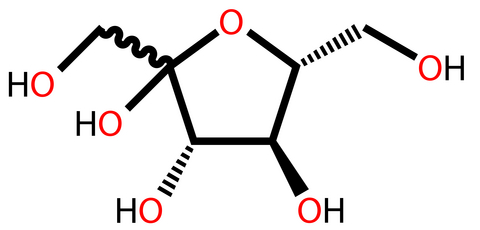
fructose, structural bonds
Frying Your Brain With Fructose and Glucose
If you have spent much time on this web site, you know that it’s dedicated to educating the public about the most common chronic disease in modern societies—Carbohydrate Associated Reversible Brain syndrome or CARB syndrome. Because this term is geared more for the medical profession and because up until now most people have never heard of CARB syndrome, we decided to use another term when discussing the disease with the general public. We often refer to the condition as “Sugar-Brain” because the title says it all. Sugar-Brain is the state of your brain when it has been exposed to excessive amounts of two simple sugars—fructose and glucose.
How could these two common sugars lead to a chronic brain disease that is now epidemic in our population? The story is simple in some ways and complicated in others. You wouldn’t be alive without glucose, the main source of energy for all the cells in your body. Today we derive most of the glucose in our bodies from the carbohydrates we eat. Carbohydrates are made of up glucose molecules connected together and the process of digestion breaks them apart into individual glucose molecules that are then transported to every cell in your body by your blood.
Throughout most of our evolutionary history, we consumed only slowly absorbed or low glycemic carbohydrates. That’s a good thing because high levels of glucose are toxic to cells so you don’t want the wild fluctuations in blood glucose caused by eating rapidly absorbed or high glycemic carbohydrates. This situation gradually changed with the introduction of refined flour and other high glycemic grains.
High glycemic carbohydrates are a minor problem unless they are combined with excessive amounts of another simple sugar called fructose. Our ancestors have consumed small amounts of fructose for eons, mainly in the form of fruit, vegetable and honey. At low levels of consumption fructose is mainly converted to glucose or glycogen–the stored form of glucose, by the liver. Over the past several hundred years this delicate balance was upended by the introduction of a unique molecule that combined both glucose and fructose—sucrose or table sugar.
Although sucrose was first refined from sugar cane up to 10,000 years ago, it only became a relatively cheap commodity over the past hundred years or so. This situation changed dramatically over the past 50 years when scientists in Japan figured out how to make sugar from corn when they developed high fructose corn syrup, a liquid sweetener with about 60% fructose and 40% glucose. Because HFCS was cheap and easy to transport, it soon became the preferred sweetener in most commercial food products.
This shift was problematic because recent research has shown that if you consume more than 25 grams of fructose daily, your liver starts to fill up with fat leading to insulin resistance where your cells no longer respond to the insulin secreted by your pancreas when you eat carbohydrates. This leaves most of the glucose in the blood stream leading to magnified glucose spikes when you consume high glycemic carbohydrates.
Although your brain relies almost 100% on glucose for its energy needs, too much glucose is toxic to nerve cells. That’s why we evolved with a complex system to keep our glucose levels rock steady regardless of how much food we were eating. The apple cart was upended when we started consuming too much food with sugar, HFCS and high glycemic carbohydrates, virtually guaranteeing that our brains would be exposed to brain-frying glucose spikes. We now know that this process leads to a chronic brain disorder referred to as Sugar-Brain or more formally Carbohydrate Associated Reversible Brain syndrome. One of the first symptoms of CARB syndrome is craving foods loaded with sugar, HFCS and high glycemic carbohydrates, creating a vicious cycle where you continue to consume the very foods that are frying your brain.
As the Sugar-Brain or CARB syndrome process unfolds, you develop up to 21 brain dysfunction symptoms that interfere with your ability to function and your brain pushes you to store extra fat at any caloric intake. A brain that doesn’t work so well and too much fat on your body—that’s the definition of Sugar-Brain.
The bottom line is that if you expose your brain to excessive amounts of fructose and glucose, your brain will end up fried and you will truly have a “Sugar-Brain”. Regardless of what we call it, you definitely don’t want to have it. This site is dedicated to teaching you how to maintain normal brain function and to avoid having Sugar-Brain or the disease we call CARB syndrome.
Right now this site is the only place on the face of the earth where you can learn about this devastating disease process. Don’t worry because we are dedicated to moving you away from Sugar-Brain back to a world of optimal functioning and health. Stay well and be well.
Dr. William Wilson