Carb Syndrome | Dr. Bill Wilson, MD —
Brain & Metabolic Health
Why are we all getting fatter and sicker, no matter what diet we try?
The answer lies deep within the human brain. For over 30 years, in my small-town Minnesota clinic, I’ve seen the same alarming pattern: patients getting more obese and more sick, struggling with a cascade of mysterious symptoms.
After measuring the body composition of more than 18,000 patients and consulting with leading neuroscientists, I’ve discovered a disease model that the medical profession has completely missed. I call it Carbohydrate Associated Reversible Brain Syndrome, or CARB Syndrome.
If I told you that you had fried your brain with the food you eat, wouldn’t you want to know how to change and get well?
— Dr. Bill Wilson
What is CARB Syndrome?
The Basics
CARB Syndrome is a form of brain dysfunction triggered by the long-term consumption of ultra-processed food—foods loaded with excess sugar, high-glycemic carbohydrates, and omega-6 fatty acids from vegetable oils. This isn’t just a dietary problem; it’s a brain-centered disease with two core components:
The Brain Dysfunction Symptoms:
The Brain Dysfunction Symptoms:
This condition alters hormone signaling and depletes key brain chemicals (neurotransmitters like serotonin and dopamine), leading to up to 22 symptoms, including:
-
Craving sweet and starchy food (the hallmark symptom)
-
Abnormal hunger drives (not feeling full)
-
Excessive mental and physical fatigue
-
Brain fog, difficulty concentrating
-
Anxiety, irritability, and mood swings
-
Feelings of depression (specifically, atypical depression with increased appetite)
-
Insomnia
-
Low self-esteem and self-image
-
And more…
The Metabolic Components:
The Metabolic Components:
-
Insulin resistance
-
Obesity (excessive body fat)
-
Prediabetes or type II diabetes
How is it different from other conditions?
It’s not just another diet. Mainstream medicine often mistakes the brain dysfunction symptoms of CARB Syndrome for traditional mental health disorders (like atypical depression, anxiety, or ADHD), creating significant diagnostic confusion. CARB Syndrome addresses the root cause in the brain, not just the symptoms or the weight gain.
If you have been diagnosed with conditions like eating disorders, fibromyalgia, irritable bowel syndrome (IBS), or PTSD, it’s possible you have only one disease—CARB Syndrome—or CARB Syndrome layered on top of a traditional disorder.
Is it really reversible?
Yes. CARB Syndrome is preventable and completely reversible with effective treatment. By addressing the underlying hormonal imbalance in the brain and following a targeted plan, many patients see major improvement or complete remission of their symptoms.
The Doctor | CARB Syndrome Project
Who is Dr. Bill Wilson?
It isn’t often that a small-town doctor makes a major medical discovery. Dr. Bill Wilson is a board-certified family practitioner who has spent over 30 years practicing in Northern Minnesota, treating housewives and miners, and delivering hundreds of babies.
But from this unlikely setting, working in the long, dark winters, Dr. Wilson was leading a double life. He was an obsessive observer and record keeper, measuring the body composition of his patients at every visit and amassing a database of over 18,000 cases.
At the same time, he pursued a lifelong interest in neuroscience, reading, studying, and corresponding with some of the world’s leading experts. He saw a simple physical principle: when it comes to fat storage, the brain calls the shots.
Building on the foundational work of Harvard researchers Drs. Hudson and Pope (who first proposed that 16 common brain disorders were linked), Dr. Wilson identified the missing pieces: the dietary triggers (ultra-processed foods) and the brain pathology (neurotransmitter depletion). He named this new disease model CARB Syndrome.
His discovery upends decades of conventional medical wisdom—and his practice experience has proven that people don’t have to go on doomed diets, take risky pharmaceuticals, or undergo dangerous surgeries to get well.

The CARB Syndrome Plan, Approach, and Lifestyle
What does the CARB Syndrome treatment involve?
Healing your brain is a multi-faceted approach. It’s not about restriction, but about restoration.
Change Your Food:
Reduce high-glycemic carbohydrates (from grains and starches), excess fructose (from added sugars), and omega-6 fatty acids (from vegetable oils). Focus on real, whole foods—a Mediterranean-style diet loaded with healthy fats, moderate protein, and carbs primarily from fruits and vegetables.
Support Your Brain Chemistry:
Use targeted supplements like CARB-22 to enhance brain neurotransmitter levels, suppress cravings, and maintain healthy brain function. Omega-3 fatty acid supplements are also key to keep your AA/EPA ratio in a healthy range.
Adopt Healthy Habits:
Get plenty of restful sleep, exercise your body (both aerobic and strength training), exercise your mind, and maintain healthy relationships. Minimal or no alcohol is recommended.
Use Medications Temporarily if Needed:
In some cases, low-dose medications can be used to control key symptoms and improve compliance, but the goal is to taper off as soon as possible.
Ready to take the next step? We’re here to guide you.
Where can I learn more about the CARB Syndrome plan?
Read the Blog: Explore our detailed posts on the CARB Syndrome concept.
Read the Book: Get Dr. Wilson’s book, Brain Drain, which outlines the concept in full detail.
Purchase the E-Book: Sugar Brain Digest—Obesity is an abbreviated version available directly on this site.
Are there recommended supplements?
Yes, a specific protocol is recommended to support brain health and manage symptoms. You can find these in our store.
-
CARB-22: The foundational precursor supplement to boost neurotransmitter levels and suppress cravings.
-
L-glutamine: To further help suppress cravings for sweet and starchy foods.
-
High-Quality Omega-3 Fatty Acids: To help regulate your AA/EPA ratio.
-
Supporting Nutrients: Such as Vitamin B12, L-methylfolate, Vitamin D & K, and a multivitamin, as needed.
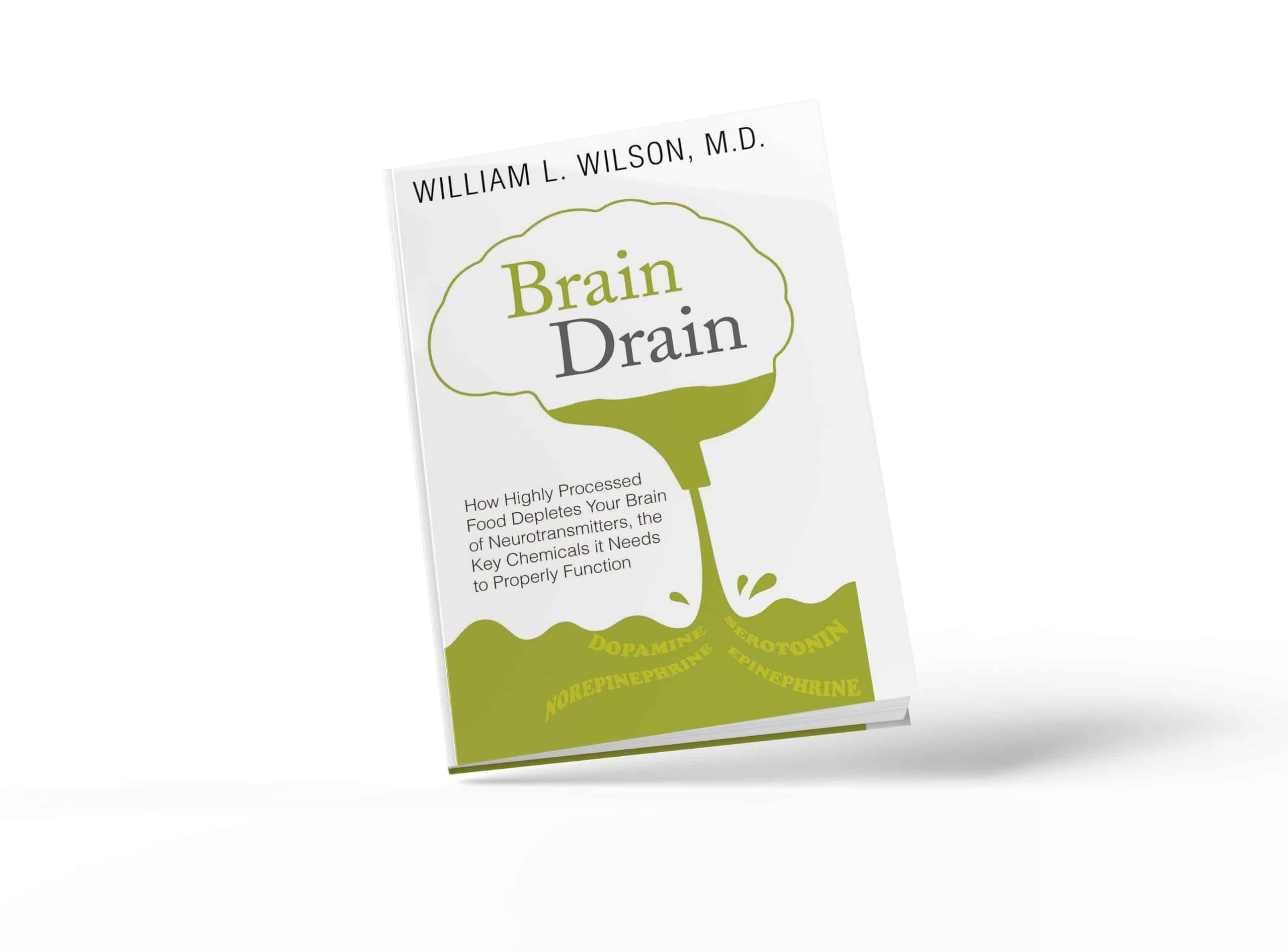
It is likely that you only have one illness—Carbohydrate Associated Brain syndrome or CARB syndrome that eventually drains your brain of monoamine neurotransmitters such as dopamine, epinephrine, serotonin and norepinephrine.
Without these chemicals, your brain starts to malfunction in ways that will qualify you for one or more traditional psychiatric disorders. What is even worse is your body will start to store extra fat regardless of your caloric intake. If you receive standard treatments for these disorders, you will get worse over time rather than better.
The solution is to diagnose your own CARB syndrome and arrange for your own effective treatment as outlined in this book.
CARB syndrome is preventable, reversible and treatable so please don’t waste any more time waiting for the “experts” to fix you.
Carb Syndrome Blog
Explore our detailed posts on the CARB Syndrome concept.
Obesity and Diabetes Afflict a New Jersey Family Fighting to Stay Fit
For two generations, obesity and its henchman diabetes have stalked Alicia Rivera’s family. They took her mother-in-law’s lower legs, which were amputated after ulcers formed that wouldn’t otherwise heal, and have consigned Alicia and her husband to daily injections and pills. The couple now lives within arm’s reach of an EpiPen—a payload of adrenaline behind a long needle—in the event of an insulin coma. All this the 46-year-old mother of three has weathered without collapse.

Sugar Consumption Increases Chances to Contract the Polio Virus
unstable glucose levels could have an influence on the risk of contracting polio. Of course we now know that excessive fructose from sugar and HFCS drives insulin resistance and when carbohydrates are consumed when you have insulin resistance, blood glucose levels rapidly rise and then crash below normal.
Humans evolved with a complex system to maintain steady glucose levels–levels that maximize neuron function.

What about those two brains? One in the head and one in the gut?
Although I believe that it’s important to maintain a healthy gut flora, I think there’s a better explanation for the connection between what’s in your gut and what happens to your brain. When you consume excessive fructose primarily from sugar and HFCS, your liver begins to fill up with fat and you end up with insulin resistance. When you have insulin resistance and consume high glycemic carbohydrates, your brain is exposed to magnified glucose spikes. Because neurons don’t have an insulin gate over time these glucose spikes lead to a diffuse brain dysfunction or “Sugar-Brain”.
Get in Touch
Book a meeting with Dr. Bill
Book a free 30 minute consultation to discuss your unique situation, then the hour introduction meeting for solutions and next steps, then follow up meetings if necessary. Meetings are held through Zoom.