
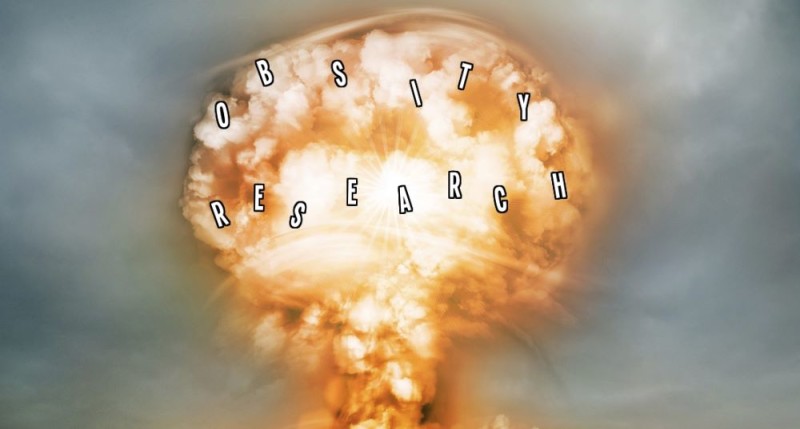
This is the statement I made to my physician wife last night after finishing this blog post. Seriously, I really did blow it to smithereens. Probably the biggest weight loss myth is the fact that there’s really no such thing as a weight problem! Remember that obesity is defined as excessive body fat, so the only truly accurate way to measure obesity is by measuring your body composition. Over the years I have taken over 18,000 such readings, so I do know a thing or two about body composition. Everybody else seems to be using weight or Body Mass Index (BMI) to measure obesity. What’s that all about?
Have Another Donut
Years ago when the NIH came out with their consensus report on obesity, they wrestled with this problem. They eventually decided to use BMI to measure obesity and this decision was made by consensus rather than based on controlled studies. Essentially there was a bunch of people sitting around a room drinking coffee and eating donuts who decided that measuring body composition was too difficult and expensive, so they went with BMI.
So what’s wrong with using BMI? BMI is a formula based on your height and weight. Think about it—your height really isn’t going to change, so when your BMI changes over time, it really just reflects a change in your weight. Although BMI, weight and percent body fat correlate in large populations, you are a person, not a population. There certainly are some large people with an elevated BMI and weight who have a normal body composition—think Arnold Schwartzenegger. There are also a lot of thin or normal sized people who have excessive body fat–the so-called thin obese.
When you look at change over time it becomes even more confusing. If you lose 10 pounds, aren’t you curious about exactly what you have lost? Is it 10 pounds of lean body loss, which is always bad or it 10 pounds of fat loss, which is always good? BMI and weight tell you nothing about what you have lost or gained. When the experts rely on weight and BMI to access your level of fatness, they are more or less guessing.
Obesity Research in the Toilet
This creates a huge mess when it comes to medical studies. If you are studying 500 obese patients based on BMI or weight, you really have no idea how many of these outliers there are in your study group. If there are only a few, your study results might be valid. If there are many outliers, then the study results will not be valid. In essence we have no way of telling the difference between valid and invalid studies, so we need to reject all of them!
The same is true for interventional studies. Because they have no idea what people are losing or gaining in their studies when weight or BMI changes, they are simply guessing. Since when did guessing become a part of science? This is also true when it comes to treating you as an individual. Unless your physician measures your body composition, they have no idea what is going on inside your body. They also have no idea whether or not their treatment interventions are resulting in fat loss, the goal of any obesity treatment program.
In the name of full disclosure, I really didn’t blow up the entire field of obesity research. Some studies actually do measure body composition, so we need to let these studies stand on their own merits. I also must admit that I had some help with my pyrotechnics. Burkhauser and Cawley made the same case in their paper “Beyond BMI: The value of more accurate measures of fatness and obesity in social science research.” Another paper suggests that BMI is not the best measure of obesity in adults.
Mom, I Got an F in BMI
The issue of using BMI has moved beyond academic discussions. Some states now require that all school children have their BMI monitored and Health Status Report Cards are sent home to parents. “Gee, Mom and Dad, I got an A in math, a B+ in social studies, an A- in history and an F in BMI.” If a child has a failing grade in BMI, then both the student and the parents will be put in the spotlight with expectations that something is going to be done about it. Why measure something if you are not going to improve on less than ideal results?
Project Eat is a population-based study of 5,000 teens. They found that higher weight and overweight teens engage in both binge-eating and unhealthy weight control more often than normal weight teens. Great—we now have state-sponsored programs to spawn a new generation of eating disorders!
So what exactly do you measure if you are trying to lose excessive body fat? After all, most people don’t have access to accurate ways of measuring their body composition. After treating thousands of patients over the years, I have learned a few useful tips. Because a pound of fat takes up a lot more space than a pound of muscle, when you lose fat rather than lean body mass, you will notice significant body shrinkage even if the scale isn’t changing that much. Your clothes will suddenly get bigger and you will start to move to the “thin” end of the closet. Rather than weighting yourself, consider taking body measurements or measuring your hip to waist ratio.
Follow Your Symptoms
Another way to tell if you are losing fat rather than muscle is to pay attention to your brain dysfunction symptoms. There are 22 brains dysfunction symptoms that can develop in people with CARB syndrome, a form of food-induced brain dysfunction where your brain puts you in a bear-in-fall fat storage mode. In my experience these symptoms track very closely with changes in your body composition. This is especially true for the cardinal symptom of CARB syndrome—cravings for sweet and starchy foods. When you have such craving then your body is likely in a fat storage mode where you will continue to store fat even when you under-eat. When these cravings disappear, your body is shedding excessive body fat. Carbohydrate cravings are like a window into your brain.
Experts Gone Awry
Now that I have trashed the concepts of BMI and weight, let’s move on to the cause of obesity. Again the experts at the NIH went on to their second round of coffee and donuts when they tackled this question. Even though their report was supposed to be “evidence based”, they once again decided to ignore the evidence and take a vote amongst themselves to decide this important question. The tried and true “energy imbalance” theory won by a landslide. If you eat too much and don’t exercise enough you get fat. If you accept their simple theory, then the solution is obvious—eat less food and exercise more. There’s only one problem with their theory. It simply hasn’t been working. People have been dieting and exercising for decades, yet the obesity epidemic is still on a tear.
In recent years many studies have documented the fact that diet composition determines body composition, not calories. If you want to learn more about the wonders of fat storage, I suggest reading Richard Johnson’s excellent book The Fat Switch. We also know that people with CARB syndrome tend to store extra fat at virtually any caloric intake, even when they are losing lean body mass from dieting. A healthy brain works in the background to auto-regulate your fat stores. When your brain is tanked because you have CARB syndrome, it can no longer perform this important function.
The real issue here is how did the experts manage to make two critical mistakes when it comes to obesity? As is usual in these situations, they had a little too much hubris (from ancient Greek ὕβρις—it means extreme pride or arrogance). You’ll have to pardon my obsession with the Greek language, but I happen to be married to a beautiful Greek lady. And believe me, I am not bragging about my mastery of the Greek language. As my in-laws often say, our Jack Russell terrier knows more Greek than I do!
Dumb, Stupid and Lazy
The coffee drinking and donut eating experts blew it because they started to think like the man on the street rather than as objective scientists: “Give me a break—I don’t need to measure anything. I can see that you are fat simply by looking at you! I also know why you are fat—you are too dumb, stupid and lazy to figure out how to eat the right amount to food and to properly regulate your level of physical activity.” Wow–so much for science. I suspect that all that donut eating created a little CARB syndrome among the experts!
It wouldn’t be so bad if this attitude was confined to coffee drinking and donut eating experts, but this is the attitude of about 90% of practicing physicians. If a patient claims that they eat less food than their skinny friends, their physician almost does a backflip from rolling their eyes. You are not just dumb, stupid and lazy-–you are also a liar! Seriously—how much worse can it get?
The Dunkin Donut experts created a huge mess. They apparently don’t know how to measure obesity and they don’t know what causes it. Virtually all the research based on their flawed concepts is now null and void. Yet there is hope. If you have CARB syndrome, you have a well-defined disease. When I see patients with CARB syndrome, it’s a very straightforward interaction. I educate them about the disease and the treatment plan and then I give them a choice about whether or not they want to treat the disease.
Fix Your Brain, Lose the Fat
I suggest that they eat a healthy diet of whole foods, cut out the sugar and HFCS, reduce their intake of high glycemic carbohydrates, reduce their intake of omega 6 fatty acids from vegetable oils and take a few targeted supplements like L-glutamine, Cinsulin and CARB-22. There you go—a simple treatment plan for a common disease is one short paragraph.
It’s the same approach I take with any other chronic disease. If they choose not to treat it, I don’t judge them. I simply tell them “If you don’t comply, don’t complain.” In other words if they chose not to treat their disease I won’t have a lot of patience in the future when it comes to listening to their complaints about living with the consequences of their untreated disease. No muss, no fuss. This is the way it should be.
Now that I’ve blown up the entire field of obesity research, is there anything else you want me to do?