
Am I Food Insecure?
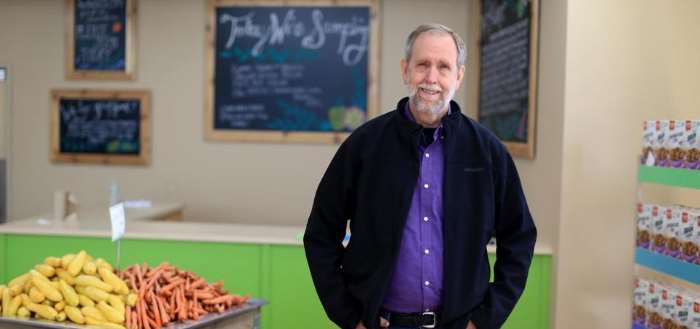
The Boston Globe recently ran a story written by Taryn Luna about a new grocery store concept called Daily Table. Doug Rauch, former president of the upscale grocery chain Trader Joe’s, runs the non-profit company that developed this unique concept. The first of many stores is scheduled to open soon in Dorchester Massachusetts. The concept behind these stores is simple, yet brilliant. Mr. Rauch has developed relationships with many different food companies and has solicited food from them that is about to be thrown away. Perhaps the food is close to its “sell-by” date, it isn’t selling well or for various reasons the food doesn’t meet their strict quality standards. As it turns out 40% of the food produced in the United States each year is thrown out. Most of this food is perfectly safe to eat, so food companies, groceries and distributers are willing to donate to Daily Table or sell it to them at a deep discount.
The Good Will of Food
Daily Table can then turn around and sell this food to people in urban areas at a steep discount. Much of this food like fresh fruits and vegetable hasn’t been readily available in poor urban areas like Dorchester. Daily Table will also be preparing homemade style meals on site for people to purchase and the cost of these meals will be competitive with fast food. Home cooked meals for the price of a Big Mac—what could go wrong? Daily Table is attempting to address the issue of “food security”. The concept of food security is a little more complex than most people think. The USDA recently broke the concept down into four groups:
Food Security:
- High food security (old label=Food security): no reported indications of food-access problems or limitations.
- Marginal food security (old label=Food security): one or two reported indications—typically of anxiety over food sufficiency or shortage of food in the house. Little or no indication of changes in diets or food intake.
Food insecurity:
- Low food security (old label=Food insecurity without hunger): reports of reduced quality, variety, or desirability of diet. Little or no indication of reduced food intake.
- Very low food security (old label=Food insecurity with hunger): Reports of multiple indications of disrupted eating patterns and reduced food intake.
I’m Insecure About the Concept of Food Security
The first group appears to be all set when it comes to healthy food and the last three groups have issues with food security. The two middle groups are suffering from lack of variety or access to healthy foods, yet they don’t come up short when it comes to calories. Only some people in the last group appear to be under-eating.
To me it looks like Daily Table is mainly addressing the middle two groups. People from the last group who don’t consume adequate calories often have other health problems that access to healthy food won’t solve. They almost always have access to cheap fast food but for various reasons they aren’t consuming enough of it. In medicine today it is rare to see truly malnourished people without a serious medical problem like cancer.
So what Daily Table appears to be doing is replacing the junk food and highly processed food that the two middle groups are currently eating with healthier, inexpensive food. I admit that this is a pretty lofty goal, but I’m not convinced it will work as intended. That’s because Daily Table assumes that when given a choice, people in the two middle groups will consistently choose say summer squash over pizza. It’s important to remember that most of the people in the middle two groups are already metabolically damaged with obesity, insulin resistance and type II diabetes. Many also have a form of food-induced brain dysfunction called Carbohydrate Associated Reversible Brain syndrome or CARB syndrome. The CARB syndrome concept is based on the premise that long-term consumption of highly processed food can change your brain in a predictable way that qualifies it as a disease process.
This is Your Brain on Twinkies
People with CARB syndrome can develop up to 22 brain dysfunction symptoms that interfere with their ability to function. The lead symptom of CARB syndrome is having strong cravings for sweet and starchy foods. In other words they have a turbocharged sweet tooth. When I observe people with CARB syndrome eating, I notice that when faced with a variety of food choices they almost always will pick the food with the highest glycemic index, meaning the food will push up their blood sugar much faster than healthier choices. This type of food is classic highly processed food loaded with added sugars, high glycemic carbohydrates especially from grains and omega 6 fatty acids from vegetable oils. It’s this spike in blood sugar that over time seems to cause brain dysfunction. CARB syndrome is epidemic in black, Hispanic and other minority communities like Dorchester because they have been eating highly processed food for a shorter period of time than white folks. Thus they have had less time to adapt to these evolutionary changes in diet. So the real questions are, what type of food will be sold at Daily Table and what type of food will people buy?
The Perils of Listening to the Wrong People
The article states: “Rauch brought in a team of nutritionists and specialists from local hospitals and universities to develop a set of guidelines for levels of sodium, fibers, sugars, and other elements in prepared meals.” This statement caught my attention because I work at numerous hospitals in the Boston area and even though the food served at these hospitals meets traditional nutritional standards, in my opinion much of this food is garbage. These hospitals are the mecca for folks who want to eat highly processed food. Diabetics are encouraged to eat sweat and starchy foods as long as they “count their carbohydrates”. Eating sweat and starchy foods causes diabetes. Can anyone say “dog chasing tail”. You don’t need guidelines for sodium, fibers, sugars and other elements when you eat whole foods. These guidelines are only relevant when dealing with processed foods.
The Upside-Down World of Nutritional Research
Recent research has turned traditional nutritional standards on its head. Today most of the people who are improving their health by changing their diet are eating Paleo, ketogenic or other whole foods diets. I’m not sure that Mr. Rauch understands any of this. I’ve shopped at enough Whole Foods stores to know that they sell a lot of fancy “junk food”. Organic cookies, crackers and cereals are still highly processed foods. The Boston Globe article states that at Daily Table you will be able to buy a pound of uncooked ziti for $.50 or a box of raisin bran cereal for $.79. In other words for 10 bucks you can have a real ziti/raisin bran party, but if you have CARB syndrome eating this type of food is like pouring gas on a fire.
Most of the people in the two middle groups above already have some degree of CARB syndrome. They might buy some summer squash for appearance sake but they surly aren’t going to pass up the cheap pasta, cereal and similar fare. I give a great deal of credit to Mr. Rauch for trying to do the right thing. If lack of high quality food is driving many of our health problems, then he will be the next Steve Jobs of nutrition. Because he isn’t a nutritional expert, he did what ethics and logic dictates—he consulted with nutritional experts from some the most prominent medical and academic centers in the world. I have nothing but respect for Mr. Rauch because he is clearly trying to do the right thing without any economic benefit for himself. But what if the world’s most prominent experts turn out to be wrong? In their view if you give people cheap, healthy food and they refuse to eat it, they can sleep in the bed they have made. In other words it’s their fault.
When Experts are Wrong, They Often Are Dead Wrong
The CARB syndrome concept is much more nuanced. If this concept is true, eating highly processed food changes the brain in a way where people simply can’t resist eating more of it. They have a disease that pushes them to eat more of the very food that is frying their brain. So who is at fault in this scenario? It clearly isn’t people with CARB syndrome or Mr. Rauch who is diligently trying to provide people with healthier food. I lay the blame directly on the shoulders of the medical and scientific communities. In my opinion they have missed the most common disease in modern societies—CARB syndrome. It’s their job to identify diseases and come up with effective treatments and in this regard they have failed miserably. From my perspective we have a lot of flat world folks living in a round world. They simply have missed the elephant in the room
Even if you can’t swallow the CARB syndrome concept, step back and look at where recent research has led us. History has taught us that sometimes the experts are wrong—dead wrong. The idea that excessive fructose from sugars is toxic is no longer a radical idea thanks to people like Richard Johnson and Robert Lustig. Gary Taubes made a strong argument that high glycemic carbohydrates are a metabolic nightmare over a decade ago in his classic book “Good Calories, Bad Calories”. Barry Sears has shown us that in order to enjoy good health, we do need to pay attention to the balance of omega 3 and omega 6 fatty acids in our diet. In the face of this mounting evidence, the idea that any processed food is healthy should certainly be called into question.
Stay Tuned
Most of the people who will be shopping at Daily Table already have CARB syndrome. If Mr. Rauch comes to understand the CARB syndrome disease model and works with professionals who know how to manage this complex disease, his concept may turn out to be revolutionary. I volunteer my support in this effort. For this to happen he will need to abandon the nutritional advice of experts from some of the world’s leading medical centers and take the advice of a simple country doctor who spent most of his career in a small town in Northern Minnesota. As they say, stay turned.