
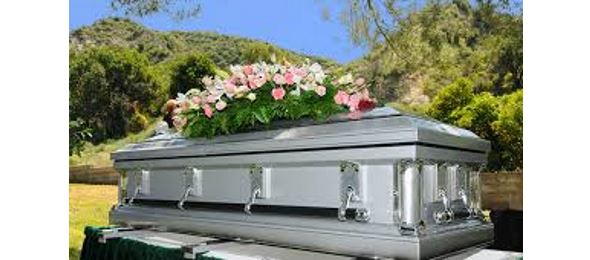
I’m not normally the type of person who focuses on the end of my life. In my opinion life is for the living, so this is where I like to spend my time and effort. That is until I was recently scheduled for a cardiac ablation procedure for my intermittent irregular heart beat (atrial fibrillation). My physicians described it as a “low risk” invasive procedure under general anesthesia lasting between 4-6 hours. Being a physician I know that a heart transplant usually doesn’t usually last this long, so I decided to read the six pages of fine print containing instructions for the procedure, including the “uncommon” but possibly fatal complications.
Pushed into Morbid Thoughts by Reality
At this point my reality was jarred to the point where I paid $99 for a quickie Legal.com will. Soon to be entering my 7th decade, this is obviously something I should have done long ago. This episode also got me thinking about what I hope to leave behind once my time on this earth is over. I think most people hope to leave behind some type of positive legacy. Leaving behind well-raised and ethical children is certainly a common goal. Artists might leave behind memorial works of art and those interested in music might leave behind written music or recorded songs. Writers leave behind the written word in their poems and books.
Leaving Behind a Legacy of Selfless Living is a Great Choice
When they planned it or not, some folks leave behind a legacy of consistently and selflessly giving to others, setting a positive example for mankind. Mother Teresa comes to mind but my parents and my Greek wife’s parents also fit this mold in their own humble ways. I’m sure you also know many people who fit this saintly mode.
Blink and You’ll Miss Helen
And then there’s all the Helens of the world. Helen is my wife’s Greek aunt. At 88 the only accurate way to describe her is “fireball”. She runs an extremely busy hair salon in central Newton, Massachusetts. I stopped going to barbers and now Helen handles all my hair issues. While we were on a recent one week vacation we left our eight-year old Jack Russel terrier with Helen and they got along famously. Helen owns and maintains a three-story house and she does all her own cooking and cleaning. She also has a front porch loaded with endless varieties of plants. When she comes to our home, I almost have to literally beat her off with a stick to keep her from cleaning up my flower beds.
Yesterday we stopped by Helen’s place to pick up our dog Athen and of course you can’t enter a Greek home without being fed. I told Helen that I wasn’t very hungry but to be polite I joined the others at the table. She served us baked squash mixed with a bit of rice, dolmades, fried haddock, steamed broccoli fresh from her garden, meatballs and artesian bread. I ended up eating half the table!
I guess I would have to place Helen in the good “fireball” category. She is constantly rushing around doing things for others and she has an almost incomprehensible joy for simply living. But unless you are in fantastic physical shape with a brain as sharp as a tack, don’t try keeping up with one of these “fireballs”. Simply sit back and enjoy the show!
I’m an Idea Guy
I don’t think I fit very well into any of these categories. Concerning saintly living, my father assured me that although he was certain that I would never be famous, he was pretty certain that I would end up being infamous! In other words, I was the “black sheep” of the family. I guess you could also call me a “thinker” or idea guy. I hope that somehow my ideas will be my legacy. Although I don’t consider myself to be in their league, people like Aristotle, Socrates, Plato, Newton, Darwin, Einstein, Tesla and many others define the concept of “idea people”. The ideas they left behind truly changed the world for the better.
Coming up with original and useful ideas that hold up to the test of time isn’t easy to accomplish. In my opinion it requires two components—a great deal of wisdom and outstanding brain function. Let’s dissect each of these separately before we consider how in combination they sometimes generate truly groundbreaking ideas and concepts.
The Tortuous Search for Wisdom
Wisdom is a bit tricky. Wisdom is something you must actively acquire and there are two ways of doing so. The first method is to make a lot of mistakes and learn from them. Making mistakes of course is relatively easy to do but learning from them can sometimes be challenging. Some people are very proficient at making mistakes but they virtually never learn anything in the process so they keep making the same mistakes. Most of us eventually start to learn valuable lesions from our mistakes and over time these accumulative lessons start to take on the mantra of wisdom. The problem with method number one is that even when you become good at learning from your mistakes, you end up getting pretty beat up in the process.
Elevate Your Search For Wisdom
At some point if you gain enough wisdom from the “school of hard knocks”, method number two starts to emerge from the fog—find wise people and listen to them. People without any wisdom don’t even realize that method number 2 exists until they have been under the spell of method number 1 for a variable but hopefully short time.
Having optimal brain function especially as you age can also be tricky. Genetic factors obviously play a role but environmental factors often tip the balance towards or away from optimal brain function. One of the problems of the wisdom/optimal brain function combination is that they often tend to be going in opposite directions. Wisdom tends to accumulate with age and brain function tends to decline with age in many people. Most people are familiar with the common medical conditions that can trash brain function—Alzheimer’s disease, vascular dementia. Lewy body dementia and Parkinson’s disease are some of the more common forms of dementia but there are also many rare hereditary disorders that can also lead to dementia. Common chronic medical problems like obesity, metabolic syndrome, diabetes, heart disease, circulatory problems, hypertension and alcohol abuse are all associated with declining brain function. It’s a wonder that anyone makes it to a ripe old age with optimal brain function.
But historically it hasn’t always been this way. In past cultures community or tribal leaders were almost always the elders of the group mainly because of their accumulated wisdom and optimal brain function. The King James Bible states: “So I took the chief of your tribes, wise men, and known, and made them heads over you, captains over thousands, and captains over hundreds, and captains over fifties, and captains over tens, and officers among your tribes.”
An Epidemic of Dementia
The common forms of dementia listed above are likely more common today than in past eras because most common chronic diseases have increased in epidemic proportions over the past 100 or so years. In my opinion by far the most common form of brain dysfunction in today’s world didn’t even exist until the past 40-50 years. It’s a form of food induced brain dysfunction called Carbohydrate Associated Reversible Brain syndrome or CARB syndrome. CARB syndrome is gradually triggered over time when people are exposed to highly processed food loaded with the deadly triad of excessive fructose mainly from added sugars, excessive high glycemic carbohydrates mainly from grains and excessive omega 6 fatty acids mainly from vegetable oils relative to omega 3 fatty acids that mainly come from fish.
From “Food Insecurity” to “Brain Insecurity” in One Generation
Over the past 40 years this type of highly processed food has permeated the world’s food supply to finally put an end to world-wide food insecurity. Unfortunately, this tsunami of highly processed food has also set off a massive epidemic of CARB syndrome. CARB syndrome initially starts out quite slowly and subtlety to the point where it was missed by the scientific and medical communities. CARB syndrome is associated with up to 22 brain dysfunction symptoms and one of which is declining cognitive function. Unlike other forms of dementia, the cognitive dysfunction associated with CARB syndrome is both preventable and reversible. Because the symptoms with CARB syndrome overlap with other common brain disorders, patients are almost always misdiagnosed and placed on medications that will further impair their cognitive function.
The actual treatment for CARB syndrome is simple and straightforward:
- Eat a whole foods diet with plenty of healthy fats and avoid all highly processed food.
- Obtain a reasonable amount of exercise including strength training.
- Take targeted supplements to optimize your AA/EPA ratio and to lower your homocysteine to below 10.
- Take a precursor supplement like CARB-22 that I sell for cost on my web site. This helps to maintain healthy levels of key monoamine neurotransmitters and reduces pesky CARB syndrome symptoms.
- For those with advanced CARB syndrome combinations of low dose medications that act on both dopamine/norepinephrine and serotonin are sometimes necessary to jumpstart the brain and improve compliance. These drugs should be combined with a precursor supplement like CARB-22 and later the drugs can be tapered.
- Maintain close and strong meaningful interpersonal relationships.
The details of treating CARB syndrome are found on my web site and will be outlined in detail in my upcoming book. The take home message is that CARB syndrome is an extremely common but preventable and treatable form of brain dysfunction that can easily disrupt normal cognitive function.
A Simple Message—Treat What You Can Treat
In my over 40 years of clinical practice I have seen many patients with two or more brain disorders at the same time compounding their cognitive problems and often CARB syndrome is one of them. Unfortunately, we don’t have great treatments for most common forms of dementia but CARB syndrome is eminently preventable and reversible. Treat your CARB syndrome and your cognitive function with jump up a few notches regardless of your starting point. As you grow older that’s not a bad deal.
Even though I have used the CARB syndrome model to successfully treat thousands of challenging patients over the years, I have never heard of anyone else on the face of the earth propose a similar disease model. That means for better or worse I own the CARB syndrome model, so when I leave this earth it will be my unique “idea legacy”. I don’t care whether I am right or wrong. If I am right, then eventually endless numbers of individuals will experience improved health. If I am wrong, no harm will be done because all treatments for CARB syndrome are very low risk and my concept will fade into the graveyard of bad ideas. The judge, jury and trial will come from Father Time and I don’t mind at all putting my legacy in his hands.
Stay tuned because I’m clearly not dead yet. As a matter of fact, I think I’m reaching some sort of peak in idea generation. I know, it’s a bit scary to have an old fart like me potentially change the world, but things could be worse—a lot worse. Stay tuned.