
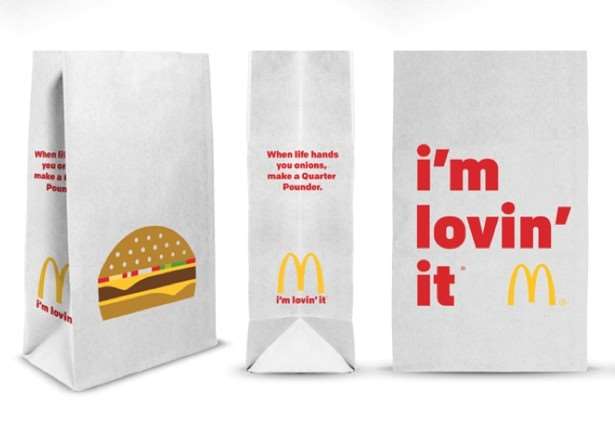
It was almost midnight and I found myself trying to force down a Big Mac and stale French fries that came in a bag with the phrase “I’m lovin’ it” plastered in large letters on the side of it. I hadn’t eaten at McDonald’s since at least 2003, the year that the “I’m Lovin’ it” became McDonalds first global catch phrase and advertising campaign. That’s not to say that I haven’t consumed some of their products over the years. In the 1950’s they opened up one of their first fast food joints in the state of Minnesota across the street from our High School in St. Louis Park. This was the place where I was first introduced to mass-produced junk food. In those days of silly suburban gangs this was also the place where I first encountered physical danger when someone shoved a handgun in my face because I was wearing a St. Louis Park letter jacket. I’m happy to report that I survived both dangers.
The Diet Health Connection
Over the years I eventually completed my medical training and once I started taking care of patients, I developed a strong interest in the connection between diet and health, especially brain function. Over the decades I couldn’t avoid the rather obvious fact that many of my patients who consumed a diet of highly processed food eventually became metabolically sick and their brains no longer worked as intended. These changes often took decades to unfold and my High School class reunions became an ideal reflection of this sad reality. Many of my friends who graduated from St. Louis Park in 1966 are either dead or chronically ill because of their poor diet over the years. I just turned 67 years old, I work 60+ hour weeks in a high stress, acute care medical environment and I also have a 13-month old daughter at home. If I want to keep going down this remarkable pathway, I definitely need to avoid Ronald McDonald and his health-destroying food.
Sometimes You Become Desperate
So what exactly led me to this late night infusion of junk food? We had just returned from three weeks in our condo in Mazatlan Mexico. In my opinion Mazatlan is paradise—great food, ideal weather and fantastic people. Now don’t get me wrong—despite my focus on healthy eating, I will still occasionally eat a hamburger that meets my standards and I have yet to find this product at any of America’s fast food chains. Across the street from our condo is a place called “El Trailor”. It’s a small restaurant that can seat perhaps 20 people between their inside and outside tables. It is a beautiful spot along the Malecon and ocean and a wonderful place to enjoy a meal while people watching as the world walks by.
A Duct Tape Restaurant
Unfortunately there is no room for a stove in this restaurant. The owner decided on a typical ingenious Mexican quick fix so he decided put his stove in a trailer that he parked next to the restaurant. To keep things simple he decided to focus on hamburgers. They cook the burgers in the trailer and then the waiters transport them to the customers. He opened two years ago and since then he has been doing gangbuster business selling fantastic hamburgers to the people of Mazatlan. If you order his “nasty burger” you will end up with 400 grams of ground beef. That’s almost a pound of meat in your burger and he also knows how to add some interesting toppings, including s whole sausage on the nasty burger (my personal favorite). His long list of toppings and condiments are fresh and local. What more could you ask for?
McDonald’s—Where’s the Beef?
Let’s look at the fast food competition. After all, just like everywhere else in this modern world, they do have a McDonalds in Mazatlan. So what exactly did I get with my Big Mac? Let’s start with the meat, the most important component of any burger. As they say, “Where’s the beef?” With a Big Mac you get a total of 90 grams of beef. In an El Trailer burger like the “Nasty Burger” you get 400 grams of ground beef. They do sell a 200-gram burger for those looking to eat on the light side. You can hardly call this “the burger wars” because McDonald’s is clearly the loser before the contest even begins. One would need to eat approximately four and a half Big Macs to equal the beef in a nasty burger (not counting the sausage). I wouldn’t want to wish four and a half of these toxic burgers on my worst enemy!
Now let’s move onto the buns. With the Big Mac you end up with three generous buns and two thin beef patties. Trust me, the “beef to bun” ratio in a Big Mac is not good. With the El Trailer burger you end up with a huge slab of ground beef surrounded by two buns and a lot of condiments leaving you with a very nice beef to bun ratio. Although we don’t know for sure, a bun from El Trailor is likely made at a local bakery from a short list of ingredients. They taste very fresh and are likely made daily. Thus they don’t need a long list of added ingredients to ensure that they have a decent “shelf life”. McDonalds buns are made in large regional factories that supply hundreds or thousands of McDonalds in their region. It may be many days or weeks until customers consume these buns. Thus they need to add a lot of chemicals and ingredients to ensure a “consistent product” regardless of when they are consumed.
This Isn’t Your Typical Ma and Pa Bakery
And exactly what is in a MacDonald’s bun? “Enriched flour (bleached wheat flour, malted barley flour, niacin, reduced iron, thiamin mononitrate, riboflavin, folic acid), water, high fructose corn syrup and/or sugar, yeast, soybean oil and/or canola oil, contains 2% or less of the following: salt, wheat gluten, calcium sulfate, calcium carbonate, ammonium sulfate, ammonium chloride, dough conditioners (may contain one or more of the following: sodium stearoyl lactylate, datem, ascorbic acid, azodicarbonamide, mono- and diglycerides, ethoxylated monoglycerides, monocalcium phosphate, enzymes, guar gum, calcium peroxide), sorbic acid, calcium propionate and/or sodium propionate (preservatives), soy lecithin.”
Holly smolly! And here I thought a bun was made of flour, salt, water and a bit of yeast. I can’t even pronounce half the stuff on this list. We already know about the problems with added sugars and excessive omega 6 fatty acids. You throw them together with white flour and you have a triple whammy of disease-triggering ingredients. Add the rest of these chemicals and you are playing Russian roulette with your health. This form of highly processed food is not only the trigger of most of our common metabolic problems like obesity, type II diabetes and insulin resistance, it also seems to be driving our epidemic of brain disorders including Carbohydrate Associated Reversible Brain syndrome or CARB syndrome.
Where’s the Beef?
Now let’s look at the beef in a McDonald’s hamburger. On their web site they mention that their cattle are given grass when they are younger and then they are transferred to Concentrated Animal Feeding Operations or CAFOs for fattening on corn or soybeans. These are the notorious factory farms you have heard so much about. Corn and soybeans are not natural foods for cows and they are loaded with omega 6 fatty acids. Excessive omega 6 fatty acids are pro-inflammatory if they aren’t balanced with adequate amounts of omega 3 fatty acids.
In my opinion if you are going to eat beef, it should be grass fed beef that is loaded with anti-inflammatory omega 3 fatty acids. For those who for whatever reason can’t eat grass fed beef they should supplement their diet with a high quality omega 3 supplement. To learn more about the role of fatty acids and health I recommend that you visit the web site of one of the world’s experts on this topic, Barry Sears. It’s interesting to note that in their defense McDonald’s removed the “pink slime” from their burgers in 2011. My question is, what the heck was it doing there in the first place? I think that I need a lot more good news from the Golden Arches before I consume anther one of their products.
Let’s Get Sauced
McDonald’s also likes to add condiments like ketchup and various sauces to many of their offerings. All of them contain added sugars—most often high fructose corn syrup, omega 6 fatty acids from vegetable oils and a long list of chemical preservatives. The question arises, just why do we need so much sugar and chemicals on our burgers and other fast food items? The simple answer is because it helps McDonalds to sell more food. CARB syndrome is caused by the long term consumption of highly processed food and the first symptom of CARB syndrome is craving sweet and starchy food, pushing people to eat more of the very food that is frying their brain. At El Trailer in Mazatlan I put a little hot sauce on my 400-gram beef burger and it was truly wonderful. Adding sugar to this feast clearly would have been an insult to a fabulous meal.
Fry Me a River
Speaking of frying, let’s move on to those famous McDonalds French fries. Earlier this year McDonalds put out an ad campaign using former “Mythbusters” host Grant Imahara to reverse engineer McDonald’s French fries. He clearly was between a rock and a hard place because he somehow had to explain the 19 ingredients in their fries:
- Potatoes
- Canola oil
- Soybean oil
- Hydrogenated soybean oil
- Natural beef flavor
- Hydrolyzed wheat
- Hydrolyzed milk
- Citric acid
- Dimethylpolysiloxane
- Dextrose
- Sodium acid pyrophosphate
- Salt
- Canola oil
- Corn oil
- Soybean oil
- Hydrogenated soybean oil
- TBHQ
- Citric acid
- Dimethylpolysiloxane
Let’s see now—the list contains added sugar (dextrose), omega 6 fatty acids from vegetable oils and high glycemic carbohydrates (potatoes). Sounds like another highly processed food to me. Throw in some ketchup and chemicals and you have a real brain-busting toxic mix. Yes, I know some people might respond to these fries with “I’m Lovin’ it.” Just because it’s addictive doesn’t mean it’s good for you.
Keep it Simple Stupid
The fries served at El Trailer are clearly sliced potatoes fried in some type of oil. In order to fully comment on their fries I would need to find out what type of oil they use, but I can guarantee you that their fries don’t have 19 ingredients! I guess it could be worse—Twinkies have 37 ingredients, yet most folks likely know that a Twinkie is a fully constructed fake food. In other words when we make it to Mars we will not find any Twinkies! Most people probably don’t suspect that the same is true for McDonald French fries. In my opinion the healthiest oil to use when frying anything is coconut oil. Although we sometimes fry with olive oil, coconut oil has a much higher smoke point and thus it degrades very little when used for frying.
For Heaven’s Sake, Give Evolution a Chance
Humans have been eating some minimally processed food for thousands of years without many adverse affects. It is clearly highly processed food—a relatively recent invention, that is destroying our collective and individual health. Just about everyone agrees that an ideal diet for humans is made up of whole foods—the type you can catch, grow or collect. Unfortunately the typical American diet consists of mostly highly processed foods. Whether this processed food is minimally processed or highly processed does make a huge difference in the health of the consumer. Thus when it comes to processing, the degree of processing lies along a spectrum. If you want to be healthy I suggest you move towards the minimally processed end of the spectrum while at the same time increasing your intake of unprocessed or whole foods. David Katz has written several excellent blog posts on this topic. Gary Taubes was one of the first writers to address this issue almost a decade ago in his classic book “Good Calories, Bad Calories.”
McDonalds—The Masters of Toxic Fake Food
That brings us back to when it comes to McDonalds, “I’m hatin’ it” says it all. Despite their aggressive ad campaigns to demystify their food, the only products that McDonald’s sells are highly processed foods. They can take a somewhat healthy choice like a salad or apple slices and quickly and quietly turn them into junk food by adding a sugary dressing loaded with toxic vegetable oils or a sweet sauce. When I was in Mazatlan I witnessed a man who appeared to be 80+ years old buying a carton of cigarettes. Smokers are usually dead or very ill at this age but a lucky few seem to escape relatively unscathed. The same is true for folks who consume a lot of highly processed foods. I see these people every day in my job as a Hospitalist. By my age (mid-sixties) many are dead or chronically ill but a lucky few seem to escape the jaws of unhealthy eating. When you carefully look at the quality of their lives, it is often impaired. They live longer but sicker lives with brains that don’t work so well. Trust me, if you live to a ripe old age you do want to bring your health and brain function with you.
McDonalds—“I’m lovin’ it” but “it” Ain’t You
I intend to stick around for a while and I want to stay physically and mentally active for the next few decades. On our way back from Mazatlan we stopped in the Twin Cities so my 96-year old mother could meet Rafaella, her latest grandchild. In my opinion this is what really defines a meaningful life. My mother has grandchildren that span almost 40 years. My oldest daughter is pregnant so I am scrambling to figure out the relationship she will have with Rafaella. The sad truth is, McDonalds has really nothing to offer when it comes to promoting this type of wonderful family interaction. With a one year old at home my reading choices have changed. As Dr. Seuss used to say, “Marvin K. Mooney Will You Please Go Now!” Just plug in “McDonalds” for Marvin and you get the picture. That is indeed why “I’m hatin’ it”.