
That’s why I anticipated the recent Science journal article from the Brain Consortium. Huge, humongous, enormous, gargantuan, colossal—I’m not sure if any of these adjectives fully grasp the impact of this article. Even though the title “Analysis of Shared Heritability in Common Disorders of the Brain” is a mouthful, the concept they are putting forth is nothing short of revolutionary. The problem is, their concept is over a decade out of date!
The Two Great Unknown Unknowns
To fully understand this issue, you will definitely need some background information. For years it’s been assumed that our vast universe is the greatest human “unknown”, at least when you stick to the physical realm. I am currently reading Stephen Hawking’s magnificent “A Brief History of Time.” When I pick the book up and start reading, I get an almost immediate headache due to the extremely complex and dense subject matter of the book. In my opinion, Hawking was one of the smartest people and greatest original thinkers who has ever lived. Black holes, infinity, endless space, billions of galaxies, multiple universes, big bang, black holes, quantum physics—I could barely comprehend even a small portion of his brilliant work and he fully acknowledged that his knowledge was only a speck of dust when compared to the vast nature of the universe.
I Do Understand the Connection Between Diet and Brain Function
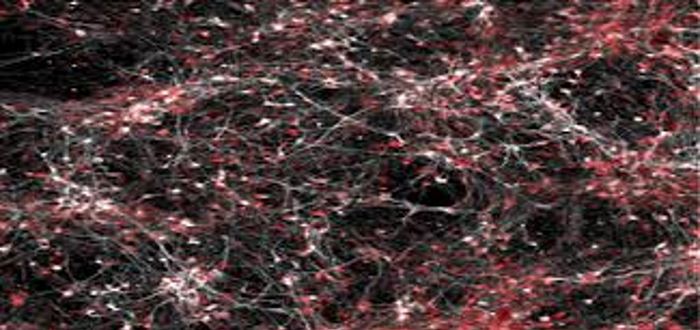
As a Family Physician with a long-standing interest in Neuroscience and the connection between diet and brain function, I know that there is another world just as complex or more complex than the universe—it’s the space between your ears, your brain. It has been estimated that there are over 8 billion cells in your brain and neurons can connect to thousands of other neurons through their axons and dendrites. There may even be more brain cells than there are stars in the Universe! The above image could either be a picture of the universe or a picture of cells inside your brain! If you guessed brain, you got it right.
Black Box Science
Neuroscience has made great advances over the past 100 years to the point where we understand much about what the brain does, but we barely have a clue exactly how it manages to do what it does. Essentially the brain is a black box. If you put in A and keep getting out B and B is something good, then you keep putting in A even if you don’t have a clue what is going on inside this black box. If you put in C and and get D and D is something bad, you quit putting in C. This aspect of Neuroscience isn’t exactly rocket science!
Let’s Throw Some Massive Brain and Computing Power at the Problem
Over the past several years the top Neuroscientists in the world decided to attack this problem head on. They formed an organization called the Brainstorm Consortium in an effort to finally figure out how the brain works. This effort involves top scientists and researchers from all the best academic centers in the world. They decided to use their own formidable brain power and massive computer power to finally wrestle the brain to the matt to figure out exactly how it works. It was really the Neuroscientist’s “moon shot”.
I was really anxious to read the Science article to see what they had come up with. As I waded through the article, I noticed that the actual paper was a mere six pages long. They had a full page of over 60 references and five pages of small print listing all the folks involved in this project. I didn’t count them, but there must have been at least several thousand individuals listed.
So Much for the Sanctity of Original Scientific Work
They concluded that ten common psychiatric brain disorders are somehow connected by hereditary factors and fourteen common neurological disorders don’t appear to have such a connection. When I read their so-called original conclusions, I almost fell over in shock! I have been saying the exact same thing for over 25 years based on decades of careful observations in my primary care practice. Two Psychiatrists from Harvard, James Hudson and Harrison Pope, published a series of papers in the early 2000s proposing that many common Psychiatric disorders were somehow connected, likely by hereditary factors. The only difference was that Hudson and Pope were more thorough—they discovered the hereditary connection between 14 common brain disorders and they even took it a step further and proposed that this was an entirely new disease that had been missed by the academic and medical communities. They called it Affective Spectrum Disorder (ASD) and proposed that ASD was likely the most common disorder in modern societies. For reasons that aren’t entirely clear to me, 15 years later their concept remains in the shadows. If you ask just about any practicing physician what they know about ASD, you will likely get a blank stare.
A Simple Country Doctor Dives into the Fray
Over decades of front line primary care practice, I had noticed a similar connection between these disorders. At the time I was also measuring body composition on all my patients and I was also treating all their medical problems, not just their brain problems. I also had a strong interest in Psychiatry and what I call clinical neurobiology. I was a member of Stephen Stahl’s Neuroscience Education Institute and I attended many of his conferences. Over time I noticed something very strange—the correlation between certain brain dysfunction symptoms and changes in body composition. It also seemed that changes in these brain symptoms always preceded changes in body composition. Over time I learned how certain interventions could suppress these symptoms and this seemed to automatically improve body composition and other metabolic parameters. These interventions were the same that were being used in other areas of medicine and they were safe, readily available and inexpensive.
I slowly started to use these measures to treat patients and when patients complied, two things seemed to happen: Their brain dysfunction symptoms dramatically improved and their percent body fat dropped along with improvement in other metabolic parameters. Soon it became very obvious to me that long-term exposure to highly processed food is the primary trigger of this disorder, so I decided to name it Carbohydrate Associated Reversible Brain syndrome or CARB syndrome. It was only later that I stumbled across the papers by Hudson and Pope and I assumed that we were looking at the same problem, perhaps from different angles. I had no way of knowing if this was true and up until recently I never had a detailed discussion with Hudson and Pope.
When I read the conclusions of the Science study, I assumed that they must have referenced Hudson and Pope, because it is standard practice to cite research that has previously found results similar to your own efforts. Although the paper had over 50 references, way down the list at the very end I found a single reference to one of Hudson and Pope’s minor papers on anorexia. They had completely failed to cite their revolutionary papers on ASD. In my opinion this is a major ethics breach. I emailed my concerns to James Hudson and he immediately responded. He stated that he was involved in the Brainstorm Consortium and he really wasn’t concerned that they didn’t cite their ASD papers.
To be honest with you, I found this to be a bit of a head scratcher. For whatever reason it seems that Hudson and Pope have moved on and over the years they didn’t spend much effort or time promoting their ASD concept. This made me question whether ASD and CARB syndrome were actually connected in any way. The facts on the ground are fairly simple—the ASD concept really isn’t helping anyone in the clinical world, whereas the CARB syndrome concept has the potential to dramatically improve the health of countless people. How do I know? Because I’ve had a front row seat watching patients improve their brain function and metabolic health by following simple and safe treatment measures. Because many physicians are unaware of the concept, I recently wrote a blog post teaching people to diagnose and treat their own CARB syndrome.
The Science Paper Needs to Be Withdrawn
Now let’s get back to the Science paper. Although James Hudson almost certainly wouldn’t agree with me, I think that the paper from the Brainstorm Consortium should be immediately withdrawn for ethical reasons. Once Hudson and Pope published their work in a peer reviewed Journal, it no longer belongs to them—it belongs to all of us. The CARB syndrome concept has also been published in a peer reviewed journal and of course my article also didn’t show up on their list of references. Although you could make the argument that the Science paper supports the CARB syndrome concept, that won’t really help any patients who suffer from these disorders because along with the ASD concept, their concept is stuck 15 years in the past. As I pointed out in my previous blog post, we now know how to easily diagnose and treat this beast, so we shouldn’t waste any more time mulling over the past.

The Neuroscientist’s “Moon Shot” Fizzles Out on the Launch Pad
So much for the Neuroscientist’s brilliant “moon shot” to show us how the brain works. In my opinion, focusing on how the brain works is a complete waste of time. As Stephen Hawking put it, you can’t know the unknowable. It’s time to acknowledge the black box and move on to doing what we do know how to do—diagnose and treat patients with food-induced brain dysfunction or CARB syndrome. What these clowns really showed us is how their brains aren’t working particularly well! Sometimes you can throw too much computing and brain power at a problem and common sense flies out the window. To me it looks like the Neuroscientist’s “Moon Shot” fizzled out on the launch pad!