
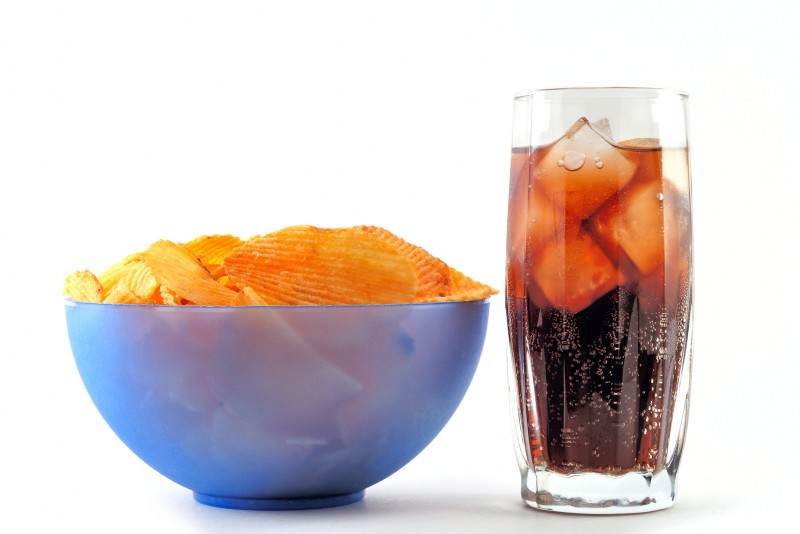
A recent issue of the New England Journal of medicine contained a triple-header of articles demonstrating the adverse effects of sugar-sweetened beverages on weight and fat accumulation in children.
The first article “Sugar-Sweetened Beverages and Genetic Obesity Risk” by Qibin Qi et al shows that in those individuals who are genetically prone to obesity, consumption of sugar-sweetened beverages seems to accelerate this process. In other words, although you can’t control your genes, you certainly can control your soda intake. It appears to be the fructose component of sugar and high fructose corn syrup (HFCS) that is driving this process. Sugary beverages are much more than “empty calories”—they also appear to be chronic toxins that need to be taxed or regulated like alcohol and tobacco.
The second article “Sugar-free Drinks in Normal-Weight Children” by J. C. de Ruyter et al clearly shows that sugar and HFCS can increase fat stores even in children who are not overweight. In other words these toxic dietary components change your body composition and increase body fat even when weight isn’t an issue. These subtle changes in body composition can easily go unnoticed because there may be little change in a your weight. You can be a metabolic mess even at a normal weight when you consume sugar and HFCS. This is especially troubling because another recent article in the Journal Pediatrics demonstrates that adolescents with metabolic syndrome, regardless of their weight, tend to have functional and structural changes to their brains. When you consume too much sugar and HFCS you also end up frying your brain!
In our opinion, exposure to the combination of excessive fructose and high glycemic carbohydrates, mainly from grains, is the primary trigger of a newly described form of food-induced brain dysfunction called Carbohydrate Associated Reversible Brain syndrome or CARB syndrome. People with CARB syndrome have the deadly combination of metabolic problems and a brain that doesn’t work as intended. Overweight children that seem to have trouble learning—our schools are now filled with children who fit this description.
The third study, “A Randomized Trial of Sugar-Sweetened Beverages and Adolescent Body Weight” by Cara B. Ebbeling et al showed that a reduction in sugary beverages results in a lower BMI and improved body composition in overweight adolescents. What’s even more interesting is that sugary beverages seemed to affect Hispanic children more than non-Hispanic children. The CARB syndrome model predicts that different ethnic groups respond to the same toxic food and beverages in different ways. It seems that a given ethnic group’s susceptibility to the adverse effects of sugar, HFCS and grain-based carbohydrates is inversely proportional to the length of time that a given race has been exposed to these dietary elements.
For example, whites have been consuming sugar and grain-based carbohydrates for 8.000-10.000 years. Blacks and Hispanics have been consuming this type of food for centuries, so they have had less time to genetically adapt to these dietary elements. Native Americans have only been consuming this food for a generation or two, so they are very prone to insulin resistance, metabolic syndrome, obesity, type II diabetes and CARB syndrome. Thus your own susceptibility to the adverse effects of these dietary elements likely depends on your racial makeup.
The solution to this problem is also very simple. You should completely eliminate sugar and HFCS from you diet and drastically reduce your intake of grain-based carbohydrates. For people with CARB syndrome, this can be a challenge because the cardinal symptom of the disease is craving food loaded with sugar, HFCS and high glycemic carbohydrates. These cravings can be very intense and persistent, easily derailing any attempts to follow a healthier diet. Years ago I discovered a simple way to knock down these pesky cravings—the simple amino acid L-glutamine. I recommend taking a minimum of 1,000 mg of L-glutamine three times daily between meals on an empty stomach. L-glutamine is inexpensive and very safe. It is available in capsules or powder and the powder can be mixed with water.
It is unusual for a well-known and respected journal like the New England Journal of Medicine to publish three articles on the same topic in one journal issue. I believe they did so because science is finally demonstrating what I have known for years—that the combination of sugar, HFCS and grain-based carbohydrates is very toxic to your health and brain function.